From Research to Roadmap
A 32-session mixed-methods mental model study that redirected company strategy away from mobile-first — and defined the modular IA behind MB5.
View studySenior UX Researcher/Manager
9+ Years
100+ Studies
1000+ Participants
01 | 👋 Hey, glad you're here
I'm Alexandra, a senior UX researcher based in the SF Bay Area
I lead strategic research in complex systems where trust is the product: security, privacy, and now AI.
Trained in experimental science, I bring a lab scientist's rigor to a very human question: what should we build, and why?
I shape trustworthy AI experiences by uncovering how people form and calibrate trust, understand system behavior, and decide when to take control.
Led the research arc behind Malwarebytes' conversational security advisor: uncovering what makes people trust a personalized, adaptive advisor before the industry had the vocabulary for it.
Built the framework for how much autonomy users would grant an automated security system, and where they needed a human in the loop.
I lead iterative research to define scalable UX architecture when complex product systems outgrow their legacy structure.
Foundational and concept-validation research as Express folded into the new Shopping tab.
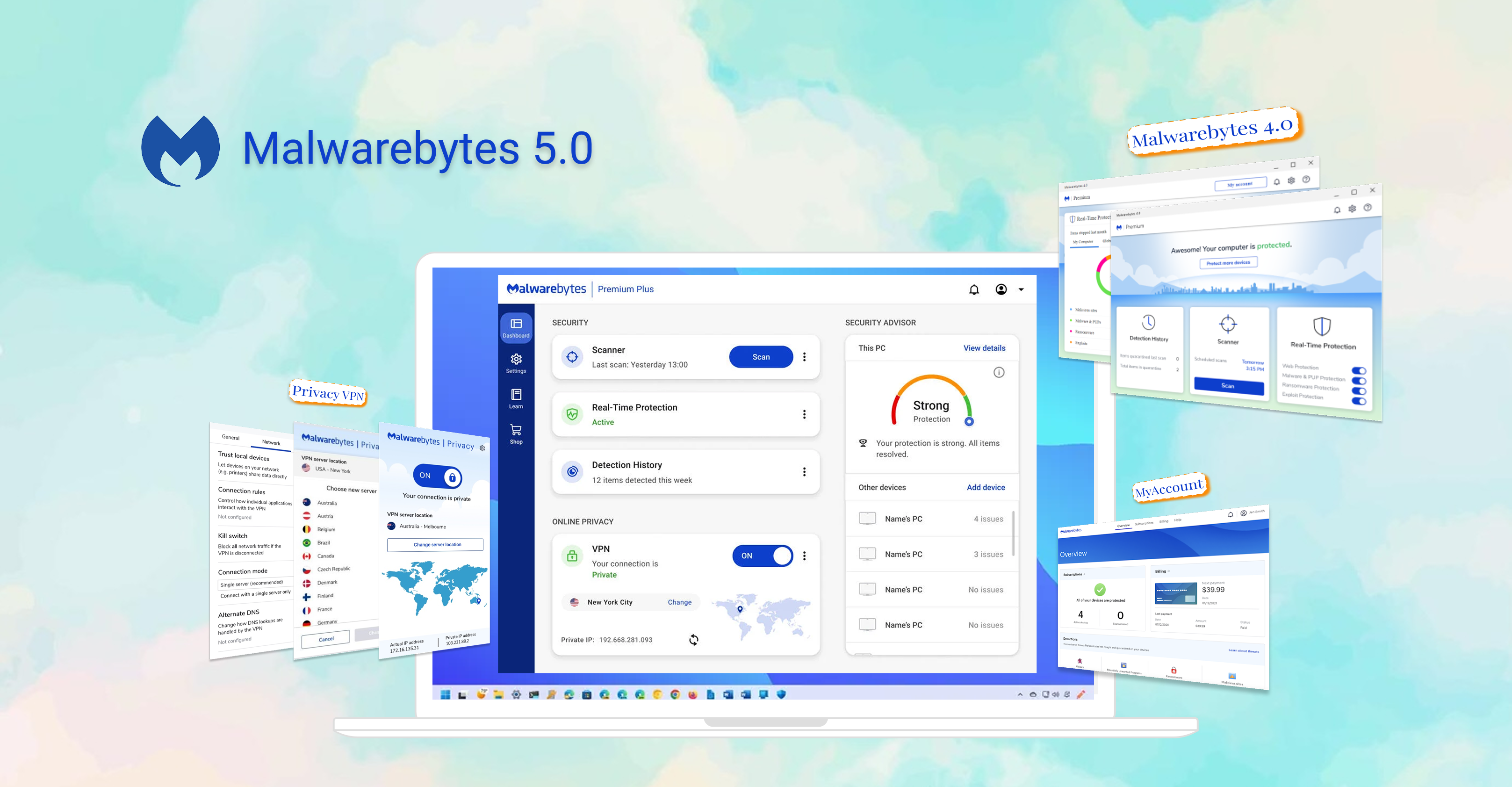
Converged four standalone products—MB4, Privacy VPN, Browser Guard, and MyAccount—into one coherent app, with mental model research defining the unified structure.
Untangled task flows, navigation, and information structures in a fragmented enterprise console into an all-in-one endpoint and data management system anchored in actionable security posture assessment.
I turn ambiguous ideas into validated product direction, from early exploration through launch.
Defined target users, unmet needs, value propositions, interaction models, and launch experience for a net-new consumer privacy product.
A researcher who ships—from pain point to vision to working product—using the same strategy-first discipline I bring to enterprise work.
I connect fragmented customer insights into an omnichannel user experience strategy that aligns XFN teams around a shared experience and product vision.
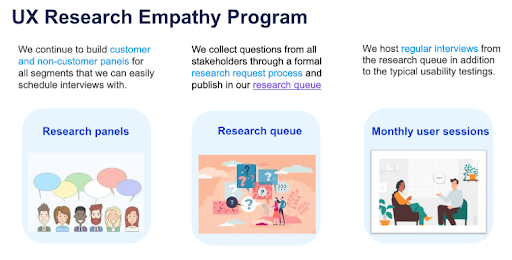
Built stronger connections between teams and users—bringing stakeholders directly into research, deepening buy-in on findings, and strengthening empathy for the end user across the product organization.
Led multidisciplinary UX work across research, interaction design, visual design, and content, while growing the research team from 2 to 5 and establishing more consistent research operations and practices.
Turned three years of archived recruiting data plus a live view of the current pipeline into a self-serve dashboard used by UXers and PMs across the Ads org.
Messy, ambiguous product problems → evidence-backed strategy that shipped.
A 32-session mixed-methods mental model study that redirected company strategy away from mobile-first — and defined the modular IA behind MB5.
View studyLed the research arc behind Malwarebytes' conversational security advisor — trust in a personalized, adaptive advisor before the industry had the vocabulary for it.
View studyRedesigning Nebula from the ground up around Security Posture Assessment — card sorts to competitor IA to usability with SMB admins and MSPs.
View studyAssistive grocery shopping with Google Shopping List — end-to-end task flows, trip-tech testing, and AI personal-assistant concepts that made the list feel less like chores and more like help.
View studyFoundational and concept-validation research as Express folded into the new Shopping tab — participatory design, competitor audits, and fieldwork that shaped how shoppers browse with confidence.
View studyThe supporting research that shaped teams, ops, and product direction.
Building data-driven personas for consumer and corporate UX — the foundation later studies (and strategy bets) stood on.
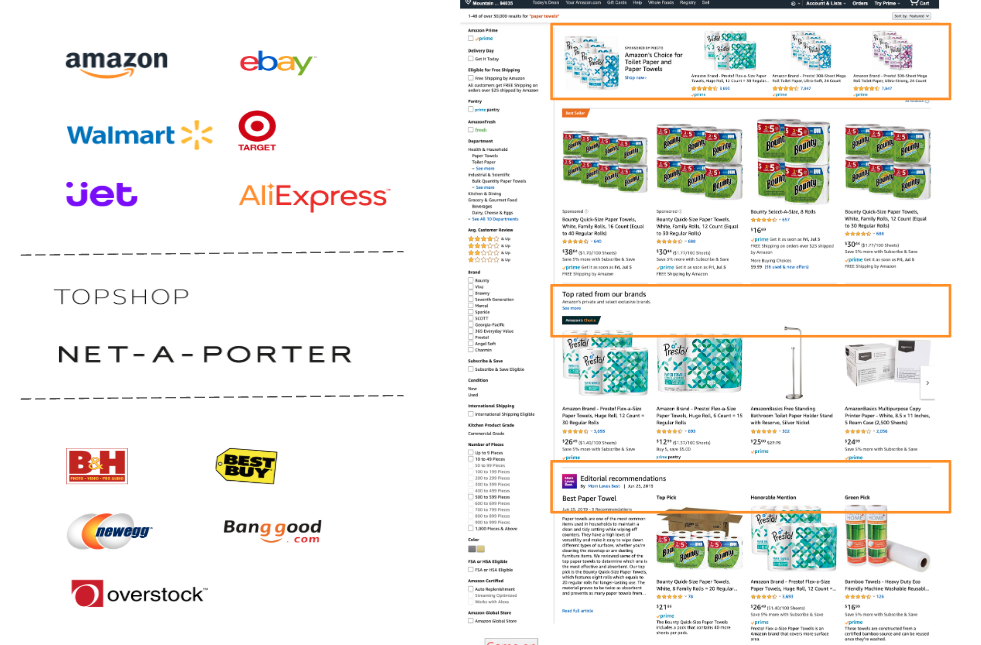
A methodology case study featuring Google Shopping SRP competitor audits — when desktop research moves the needle.
Visualizing UX research recruiting at scale for Google Ads — dashboards that made a messy pipeline strategic.
Building — and knowing when to let go of — a participatory research program so more teams could sit with users.
Building Malwarebytes 5.0 — converging four standalone products into one coherent, consumer-first security experience.
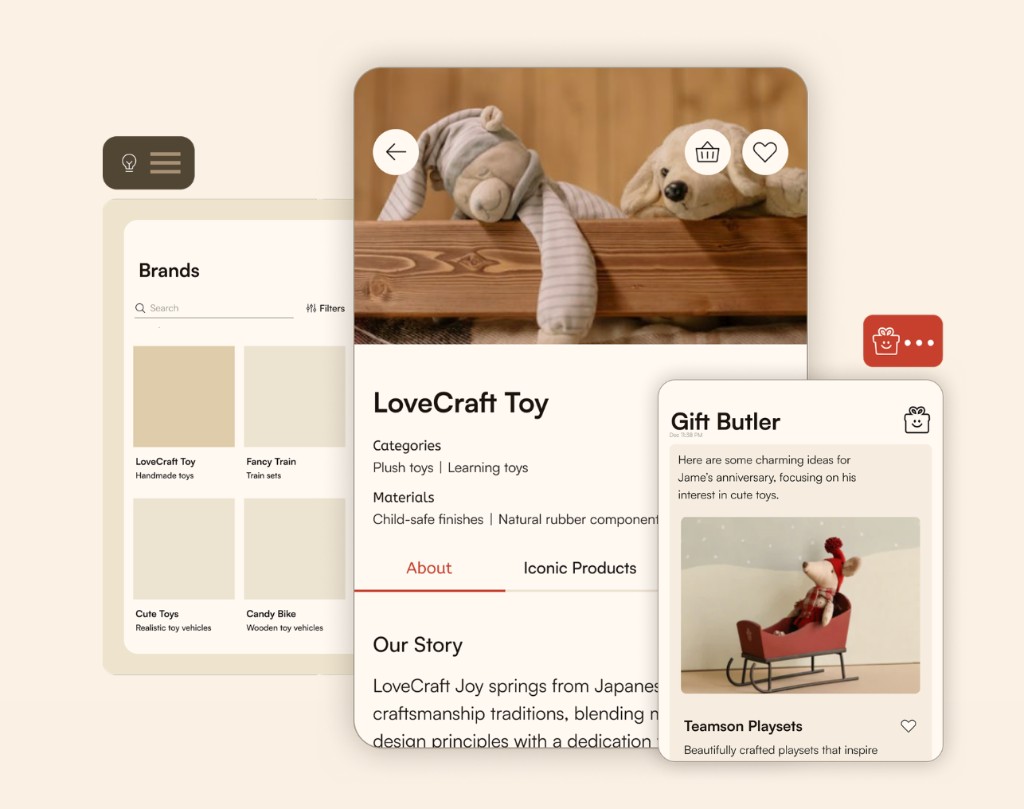
Steered product vision from a personal CRM to a gifting platform with light CRM — and authored the strategy set (roadmap, launch PRD, ops plan, decision log).
Understand the system → explain the mechanism → influence direction early → make the evidence travel.
In a complex, data-heavy system, pain points rarely exist in a single dimension; solving them usually requires a set of features working in synergy. Lately, my research has focused on system-level investigation: reconciling different products, users, workflows, and mental models into a coherent experience rather than optimizing isolated surfaces. Once those relationships have a shared language, the architecture starts to reveal itself: what should be unified, what should remain distinct, where structural debt has accumulated, and what changes need to move as a system. That UX architecture blueprint is where I believe research creates its highest leverage.
A result becomes useful when I can explain what produced it. I keep tracing the evidence past the surface finding to the mechanism underneath, because the “why” is what transfers to the next decision. I test alternative explanations and account for competing variables until the causal story holds up and survives scrutiny.
Research creates the most leverage before direction hardens. I invest upstream, while assumptions and decisions are still cheap to change. Working in trust and cybersecurity sharpened my instinct for de-risking: move fast when decisions are reversible; apply more rigor when the consequences aren’t. As AI makes execution cheaper and faster, that judgment matters even more.
Producing good evidence is half the job. I build the reporting rhythms, dashboards, and programs that put it in front of the people whose decisions it should change. Research scales when evidence travels, not when everyone is asked to become a researcher.
Curious how I became this person?
I believe by working hard, being kind — amazing things will happen.
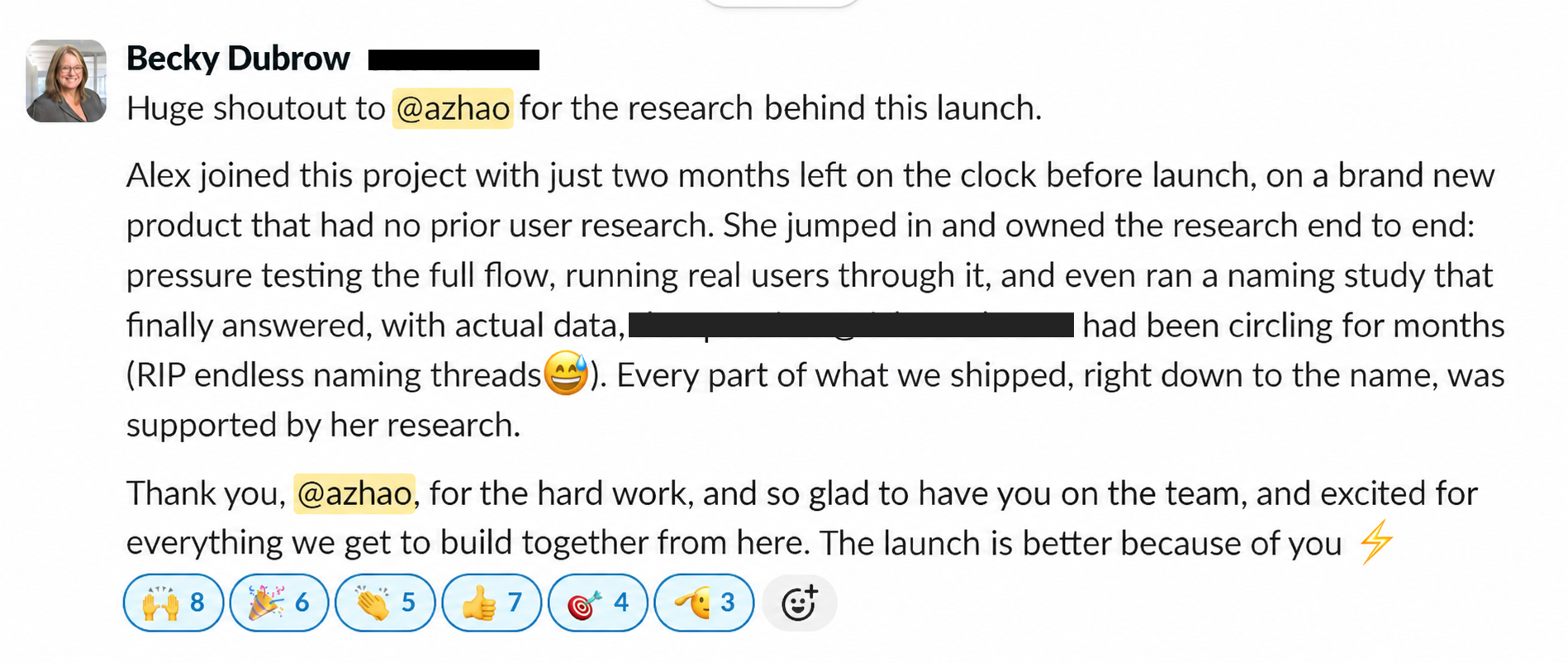
Lorem ipsum dolor sit amet — Alex always finds the signal in the noise and makes the next decision feel obvious.
Ut enim ad minim veniam — sharp questions, kinder rooms, better product calls. Grateful we got to partner with her. She de-risks the fuzzy middle so the team can ship with confidence.

Her research always provided actionable insights that we as Product could leverage. She was always able to cut through the noise and find the information that was the most relevant, and distill that into something useful.

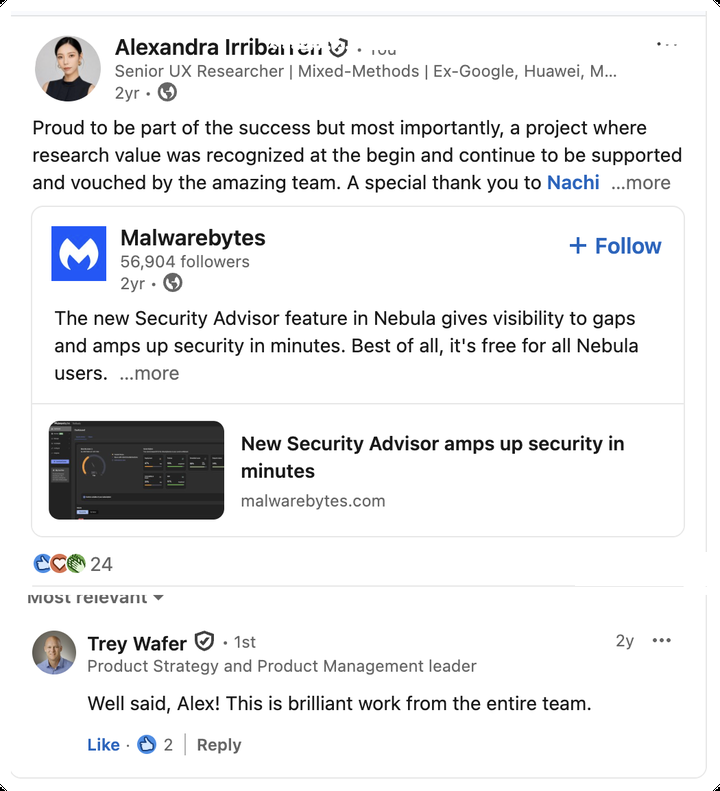
I consider myself very lucky to have had the opportunity to work with Alexandra. In my experience, it's rare to encounter someone who possesses strong leadership skills AND the domain-specific expertise to help scaffold your own growth; Alex has both in spades. She has an excellent understanding of the UX process (in both methodological and business applications) and how to apply research to provide understanding, insight, and direction. In projects where we worked together, I was always impressed by her ability to “cut through the fog” that can surround research topics and identify the underlying questions.
Beyond her talents as an individual contributor, Alexandra also did an excellent job leading the UX Research team, even as business objectives and priorities would shift rapidly. She advocated strongly for both the role of UX research and for the individual UX researchers on her team, fostering cross-functional collaboration and empowering us to be the internal experts on our users.
On a personal level, every conversation I had with Alex felt honest and respectful. As a result, when it came time for performance reviews, it was much easier for us to talk openly about my strengths and weaknesses and — perhaps more importantly — what steps I could take to continue to grow. I truly feel like her guidance and support over the past 2+ years has had a significant (positive!) impact on my skills as a researcher and my expectations for a leader, and any team lucky enough to have her will undoubtedly find themselves feeling the same.